
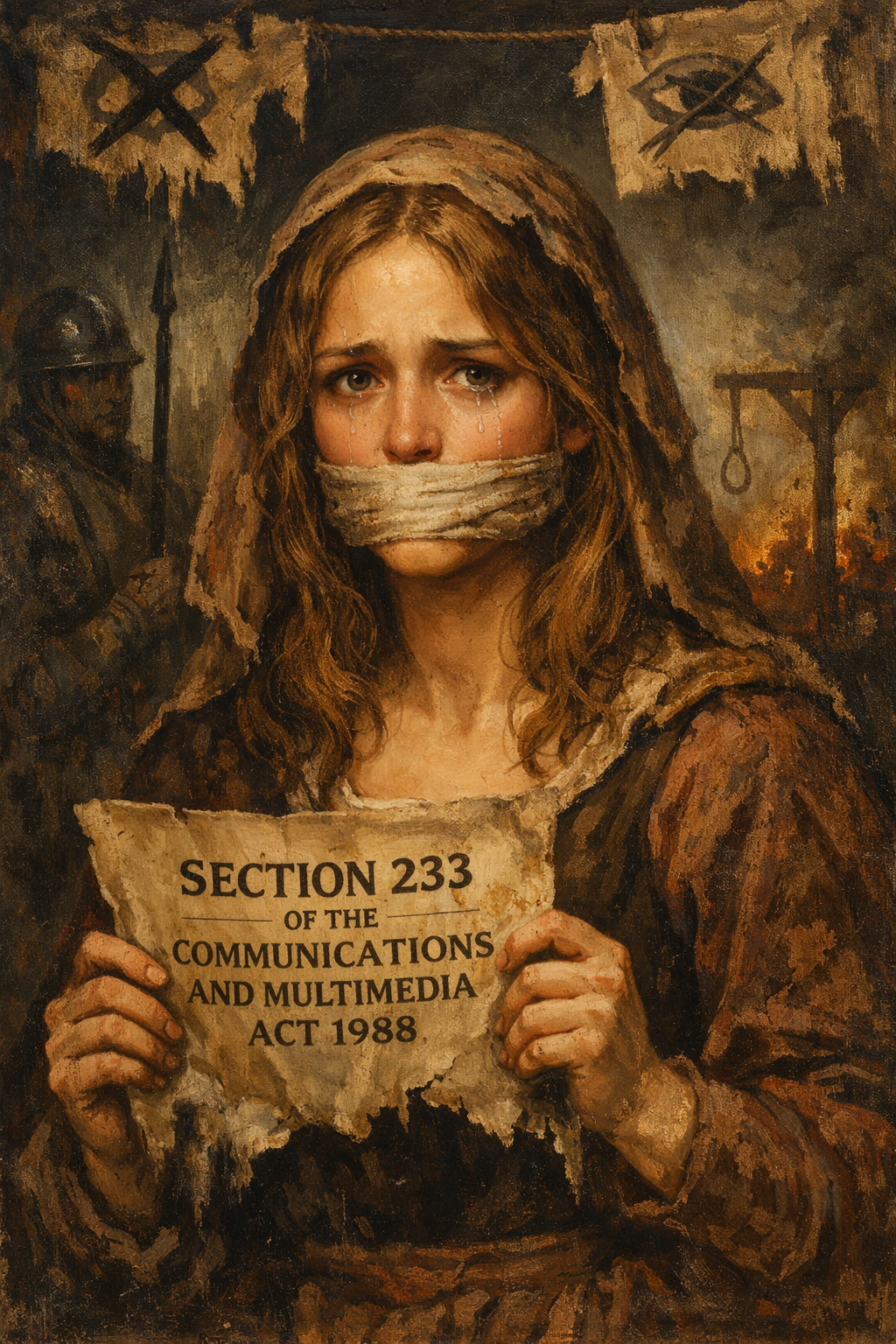
Can we be sued for Offensive speech in social media?
Abstract
This article explores the judgment and principle decided in the Court of Appeal Case of Heidy Quah Gaik Li v Kerajaan Malaysia [2025] 9 CLJ 234 and the applicability of section 233 of the Communications and Multimedia Act 1988 [CMA 1988]. Essentially, the appellant had challenged the constitutionality of section 233 CMA on the ground that it infringed article 10(2) of the Federal Constitution on freedom of expression. The penalty imposed is up to one year of jail imprisonment and a fine up to RM50,000 or both.
Fact of the Case
Heidi Quah, a Malaysian Citizen posted on facebook on the 05.06.2020, related to a spread of Covid-19 pandemic with the lack of safety and health precautions that have taken place in an immigration detention centre.
She was charged under section 233 CMA for knowingly making and initiating a transmission of offensive comments with intent to annoy others.
If she is guilty, she may be fine up to RM50,000 or imprisonment for up to one year.
She then filed an application to the High Court to challenge the constitutionality of s.233 CMA, but was dismissed. Hence, she appealed to the Court of Appeal.
Decision & Principle
- Offence under Section 233 of the CMA the most affects “law and order” but not “public order”.
- Some truths may be unpalatable does not justifying criminalizing the messenger merely because some masses of the people do not like the message.
- There would be people at the far extreme who would be annoyed by what is considered offensive but no less true.
- The dictionary definition of “offensive” and “annoy” connote triviality which has little or no bearing to public order.
- At best, an offensive speech with the intention to annoy would amount to preserving law and order, which is distinct from public order.
- The truth of a message so communicated is subordinated to the feelings and perceptions of a person or a group or persons, who say they have been annoyed. Such annoyance, could not be a threat to “public order”.
- Criminalizing offensive speech with the intent to annoy has no rational nexus to aim of regulating the civility of the discourse because it wrongly assumes the society has a uniform standard in determining what is offensive.
- It is only too obvious that in a diverse society made up of different races, religions, persuasions of what is offensive to a particular person may not be for others.
- Section 233 of the CMAdoes not provide any standards as to what amounts to offensive or what would amount to an intent to annoy.
- When all types of speeches could potentially be offensive if a single person finds it so then freedom of speech has become illusory and enforcement becomes arbitrary.
- With no objective standard, regulating the civility of discourse over the internet becomes a euphemism for policing and censorship of undesirable speeches by the authorities with the resulting chilling effect over freedom of speech and expression enshrined under 10(1)(a) of the FC.
Conclusion
Section 233 was struck down on 23.08.2025 by the Court of Appeal. The Attorney General chamber appealed to the Federal Court, and the decision will be announced on 06.02.2026 by the Federal Court.

